Latinica
  Ћирилица
  English
 - HOME
- ABOUT THE INSTITUTE
- INSTITUTE ACTIVITY
- Institute competence
- Works and activities
- Information
- Republic administrative fee - PDF
- Pricelist – for compiling Conditions for Technical Protection Measures on immovable cultural resources of exceptional significance in the integrated e-procedure - PDF
- Decision on export of objects abroad
- Pricelist of the IPCMS services for the third parties - PDF
- Application for issuing the consent to the project - PDF, individual - PDF
- Application for issuing the consent to the project - PDF, legal entity - PDF
- Request for issuance of conditions for the performance of technical protection measures and other works, individual - PDF
- Request for issuance of conditions for the performance of technical protection measures and other works, legal entity - PDF
- Pricelist of services regarding the use of the photographs from the photo library - PDF
- Professional exam
- The Higher Vocational Education Titles
- Library and publishing activity
- LINKS
- IMMOVABLE CULTURAL PROPERTIES

INSTITUTE FOR THE PROTECTION OF CULTURAL MONUMENTS OF SERBIA
Ф +381 (011) 34-41-430
Email: sekretarijat@heritage.gov.rsPR
+381 64 8820 553
pr.kontakt@heritage.gov.rsStr. Radoslava Grujica 11 11118 Belgrade, Serbia
See Google Maps Opening hours
The Institute's opening hours
08-16
The exporting of objects - appointments with clients
09-14
Archive - appointments with clients
09-13
Final Conference and International Advocacy Event in Budapest
On 17 and 18 June 2026, the closing conference and international event were held within the project “Identifying Solutions for Labour Market Imbalances in the Cultural Heritage Sector in the Danube Region by Improving its Accessibility to Young Professionals” (CultHeRit). The event was organised at the Petőfi Literary Museum (Petőfi Irodalmi Múzeum), with the Museum of Applied Arts in Budapest serving as host.
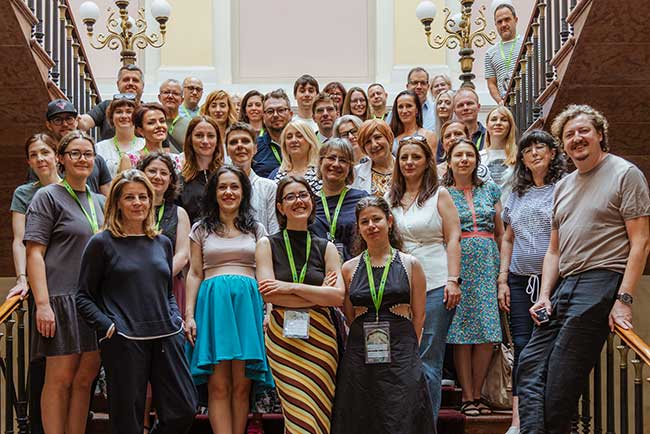
The gathering was attended by representatives of all thirteen partner institutions involved in the project. The first day of the conference was opened with welcoming remarks by representatives of the project’s lead partners, Zsombor Jékely (Hungarian National Museum Public Collection Center) and Marija Vidanović (Joint Secretariat of Danube Interreg).
Following the introductory remarks, the Transnational Aspirational Employment Model in the CHIM sector was presented in a session delivered by Thomas Philipp, as well as the Transnational Strategy for improving the accessibility of jobs and employment conditions in the sector across the Danube Region, presented in a segment moderated by Stefan Cibian.
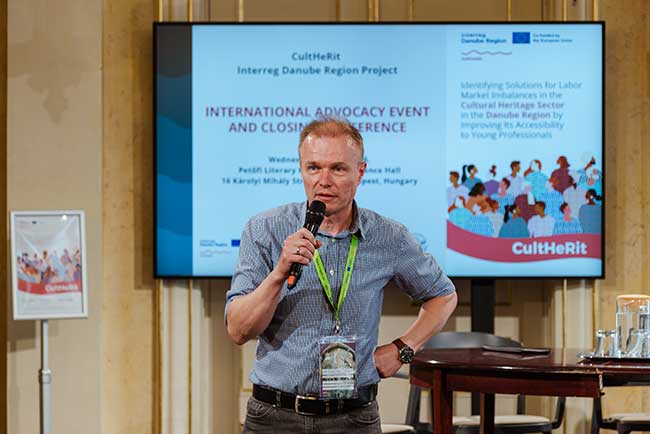
The partners were shown a film on working conditions in the cultural heritage protection sector, directed by Mihai Dragolea. The film represents a reflection of the project and a record of the joint work addressing the challenges faced by the institutions participating in the project.
In the second part of the day, a panel discussion titled “Future of Employment in CHIM Sector” was held, moderated by Senka Gavranov, with panellists Dr Zsombor Jékely (Director of Collections, MNMKK), Dr Sári Zsolt (Deputy-Director of the Hungarian OpenAir Museum; President of the Association of European Open AirMuseums) and Graham Bell (President of Cultura Trust and Board Member of Europa Nostra).
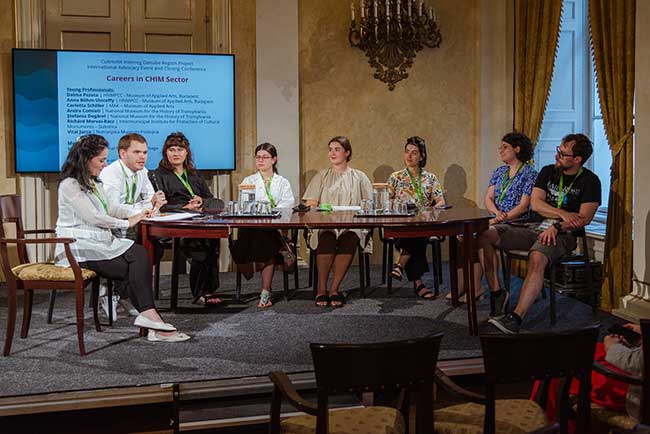
The programme of the first day concluded with a panel discussion titled “Careers in the CHIM Sector”, moderated by Lucia Leca (National Institute of Heritage Romania), with the participation of young professionals involved in the implementation of the CultHeRit project.
On the second day of the conference, a Steering Committee meeting was held, dedicated to analysing the financial implementation of the project and preparing the final progress report, while members of the Key Stakeholder Group participated in parallel in a workshop on intergenerational cooperation and securing the future of the CHIM sector.
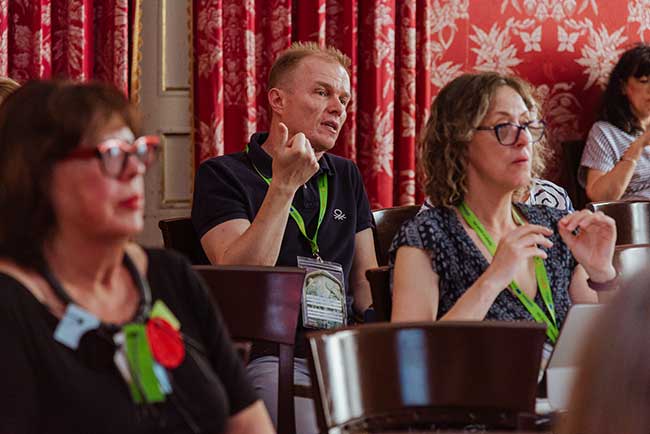
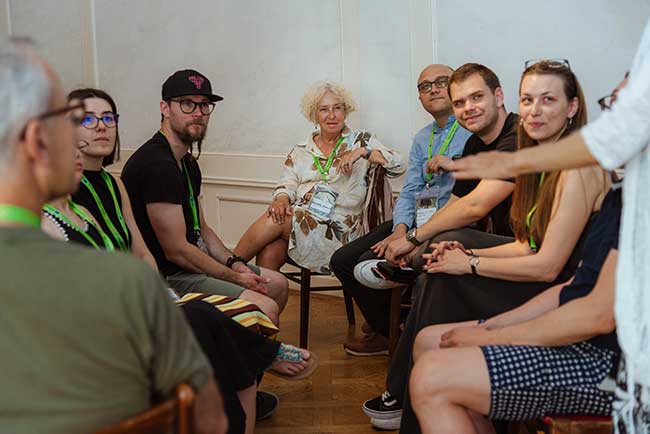
The closing conference in Budapest marked the end of several years of joint work among the partner institutions. The CultHeRit project resulted in concrete solutions – from the transnational strategy and aspirational employment model to internal acts adopted by the partner institutions, all of which share the common goal of creating a more sustainable and accessible labour market in the CHIM sector. The partners hope that the initiatives launched within CultHeRit will be reflected in employment policies and practices throughout the region. As a concrete result of its participation in the project, the Republic Institute for the Protection of Cultural Monuments adopted the Mentorship Rulebook, which represents an institutional contribution to improving working conditions for newly employed staff and a model of good practice for related institutions in the sector.
The Republic Institute for the Protection of Cultural Monuments was represented by Vladimir Džamić, Tatjana Tripković, Ana Vranješ and Danica Čolakov.
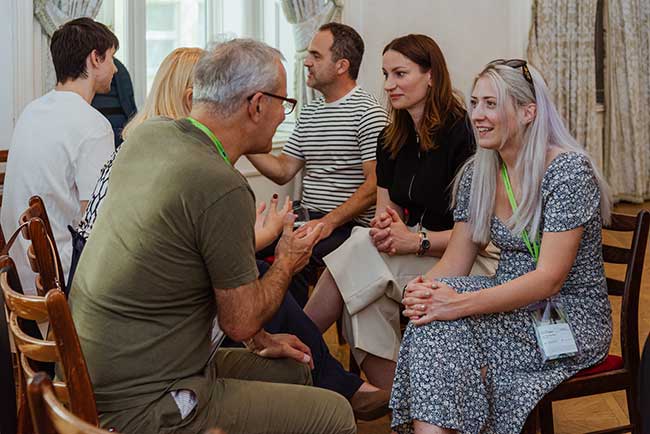
Photo: Szalontai Zoltán
Project partners:
- Hungarian National Museum Public Collection Centre – Museum of Applied Arts, Lead partner (Iparművészeti Múzeum)
- MAK – Museum of Applied Arts (Museum für angewandte Kunst)
- • KUPF OÖ - Cultural Platform Upper Austria (Kulturplattform Oberösterreich))
- National Institute of Heritage (Institutul National al Patrimoniului)
- National Museum for the History of Transylvania (Muzeul Național de Istorie a Transilvaniei)
- Bihor County Employment Agency (Agenția Județeanăpentru Ocuparea Forței de Munc Bihor)
- INSTITUTE FOR THE PROTECTION OF CULTURAL MONUMENTS OF SERBIA (Republički zavod za zaštitu spomenika kulture)
- Intermunicipal Institute for Protection of Cultural Monuments – Subotica (Мeđuopštinski zavod za zaštitu spomenika kulture);
- Serbia Trade Union of Employees in Cultural Institutions (Samostalni sindikat zaposlenih u kulturi)
- Museum of Decorative Arts in Prague (Uměleckoprůmyslové museum v Praze)
- Institute for Protection of Cultural-Historical and Natural Heritage of Republic of Srpska (Zavod za zaštitu kulturno-istorijskog i prirodnog nasljeđa Republike Srpske)
- • Museum of Arts and Crafts (Muzej za umjetnost i obrt)
- Notranjska Museum Postojna (Notranjski muzej Postojna
This project is supported by the Interreg Danube Region Programme co-funded by the European Union.
AKTUELNOSTI
-

Novo izdanje Saopštenja XLIX 2017
Saopštenja XLIX 2017... -

Zbornik radova „Arheološka istraživanja na autoputu E80“
Republički zavod za zaštitu spomenika kulture objavio... -

Novo izdanje "SVETSKA BAŠTINA SRBIJA/WORLD HERITAGE SERBIA"
Dragi ljubitelji knjige, umetnosti, kulturne istorije, Republički zavod za zaštitu spomenika kulture, vam i ove 2018... -

A. Davidov Temerinski, Bogorodica Ljeviška u Prizrenu
Iz štampe izašla nova monografija autorke A. Davidov Temerinski... -

„70. godina Republičkog zavoda za zaštitu spomenika kulture“
Jubilej... -
Tim iz Zavoda učestvovao na „Konzervatorskoj radionica Stećci – srednjovekovni nadgrobni spomenici“ Žabljak 5-10.novembar 2017.
„Konzervatorskoj radionica Stećci – srednjovekovni nadgrobni spomenici“...